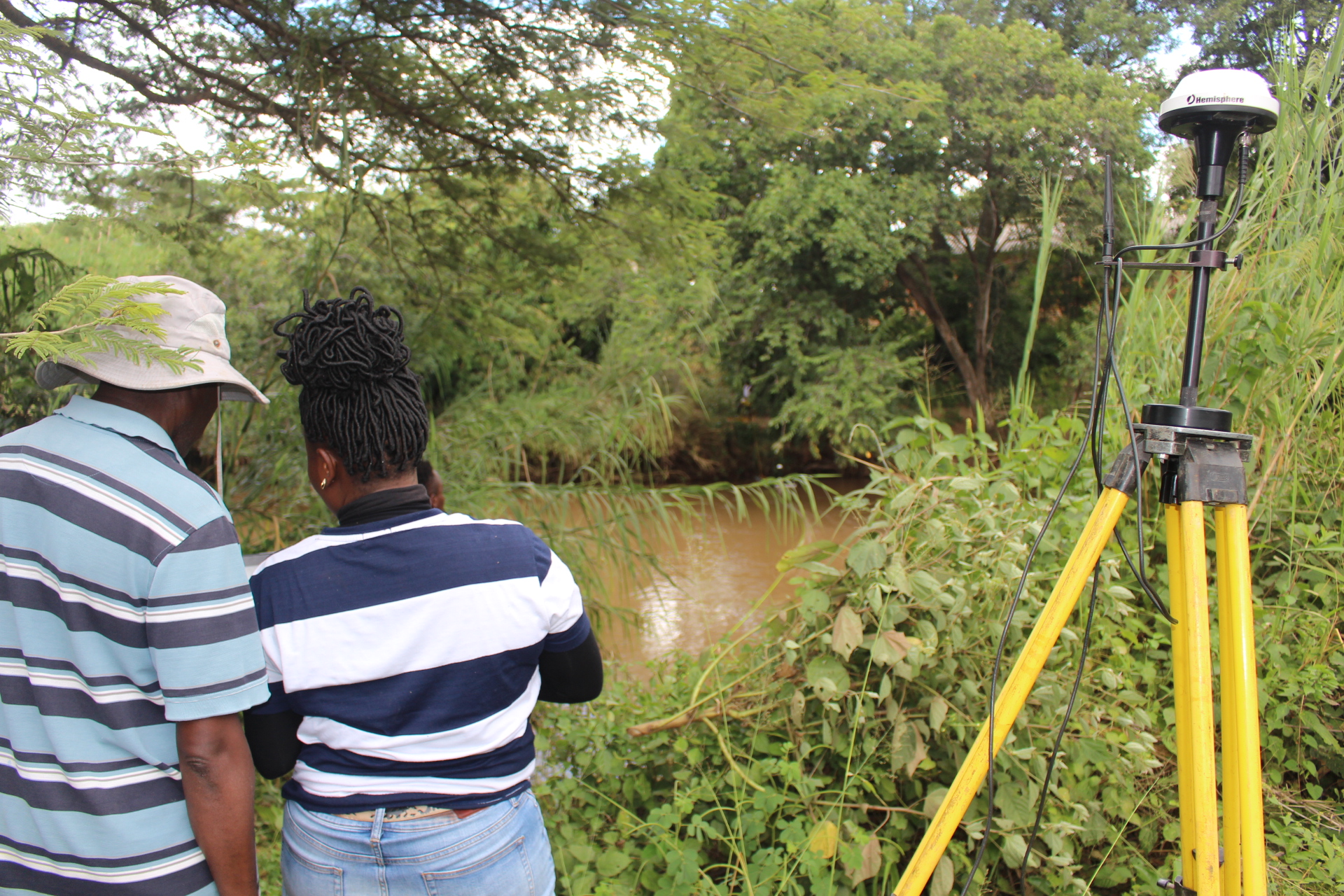
EFLOWS Project Researchers continue with the Wet season Data collection in the Mbarali River


By Placid Kabalo

Researchers from Sokoine University of Agriculture (SUA) in collaboration with Researchers from the National Environmental Management Council (NEMC) and Researchers from the Rufiji River Basin (RBWB), have met for four days in Rujewa town in Mbarali District in Mbeya Region to collect various Research Data in looking at the ecosystem of the Mbarali River. The Mbarali River is one of the rivers that flows into the Great Ruaha River whose waters flow into the Rufiji River and into the Indian Ocean.


Botany researchers collecting data


Researcher collecting samples of insects in the Mbarali River


Hydrologists collecting various data within the Mbarali river


Various species of fish were caught from the Mbarali River for research


Comments

Popular posts from this blog

Mradi wa EFLOWS unategemea kupanda miti rafiki zaidi ya miche 100,000 kwenye vyanzo vya mto mbarali

Kutokana na uharibifu wa vyanzo vya maji na uoto wa asili uliofanyika kandokando ya mto Mbarali uliotokana na shughuli za kilimo na ufugaji, mradi wa EFLOWS unatarajia kuanzisha vitalu vya miti Rafiki kwa mazingira zaidi ya laki moja kwaajili ya kupanda kandokando ya mto huo. SOMA ZAIDI KWENYE LINK HII HAPA CHINI Mradi wa EFLOWS unategemea kupanda miti rafiki zaidi ya miche 100,000 kwenye vyanzo vya mto mbarali

EFLOWS Research Project shows that Water is Decreasing in Rivers

  Amina Hezron and Calvin Gwabara The results of a two-year study to look at the flow of water and the health of the Mbarali River in Mbeya Region have shown that the water is decreasing and this is due to the increase in population, high demand for water use along with the destruction of the river's water sources. EFLOWS Project Principal Investigator Prof. Japhet Kashaigili presenting the results of the research in front of stakeholders That was stated by Prof. Japhet Kashaigili from the Sokoine University of Agriculture (SUA) who is the Principal Researcher of the two-year project on the Sustainable Catchment Management through Enhanced Environmental Flows Assessment and Implementation for the protection of the Western Indian Ocean from land-based sources and activities in Tanzania (EFLOWS) while presenting the results of the study to the stakeholders of the Mbarali River in the district in Mbeya Region. "What we have seen in the research is that the amount of water in ...

EFLOWS INCEPTION WORKSHOP PROCEEDINGS 29th JULY, 2021

Inception Workshop Report The Environmental Flows Assessment (EFA) concept has been adopted in Tanzania with guidelines and procedures prepared at the national level, but are yet to be operationalized. Lack of awareness among practitioners and stakeholders at the basin and local levels has been reported to be one of the major setbacks for operationalization. This calls for capacity building and awareness creation of stakeholders in the Rufiji River Basin to fully embrace and operationalize EFA. In this regards, NEMC and SUA developed a project titled “ Sustainable Catchment Management through Enhanced Environmental Flow Assessment and Implementation for the Protection of the Western Indian Ocean from Land-based Sources and Activities in Tanzania (EFLOWS) ” which is funded by the United Nation Environment Programme (UNEP) through the Western Indian Ocean Strategic Action Programme (WIOSAP). The project aims to reduce impacts/stress from land-based sources and activities and sustai...